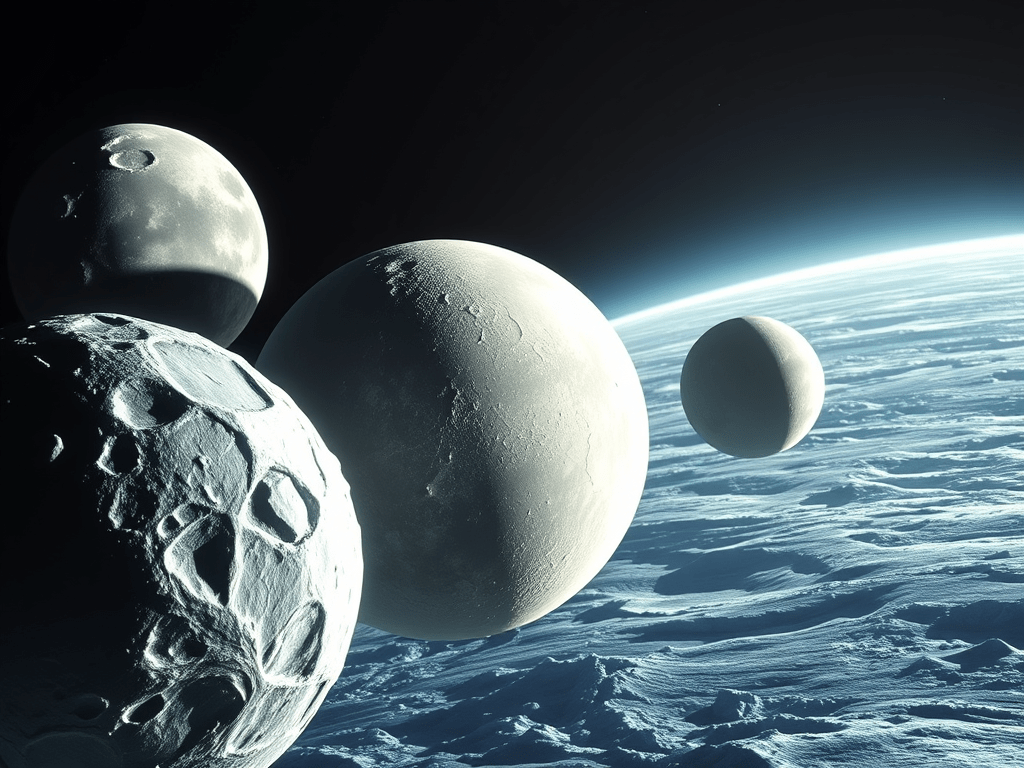
The biblical creation of the solar system, as I have outlined in my model, posits the existence of the “Waters Above” in the form of icy material in the outer regions of the solar system. This means many icy worlds, comets and bodies in orbit around the Sun that comprise of a lot of water ice as well as other volatiles.
My model for the formation of the solar system can be found in my book “Physics of Creation” and/or in a series of my pieces listed below under the heading Related Reading.
In relation to the creative process God used to create the planets and other bodies in the solar system I contend that the following passage in Genesis is most relevant.
6 And God said, “Let there be an expanse in the midst of the waters, and let it separate the waters from the waters.” 7 And God made the expanse and separated the waters that were under the expanse [“Waters Below”] from the waters that were above the expanse [“Waters Above”]. And it was so.
Genesis 1:6-7 ESV
The separation of the “Waters Below” from the “Waters Above” on the second day of creation meant that a lot of water (which became ice) was separated out to the outer regions of the solar system. From that God created the planets and other objects in solar orbit. So we would expect to find a lot of water, ice and other light volatiles in the outer planets: Saturn, Jupiter, Neptune, Uranus, Pluto and all other Kuiper Belt objects. I am including Pluto and Charon, its binary orbital partner, as Kuiper Belt objects.

The disk of icy material is now largely found beyond the orbit of Neptune which we call the Kuiper Belt. It comprises many thousands of icy objects including planetoids and cometary cores.
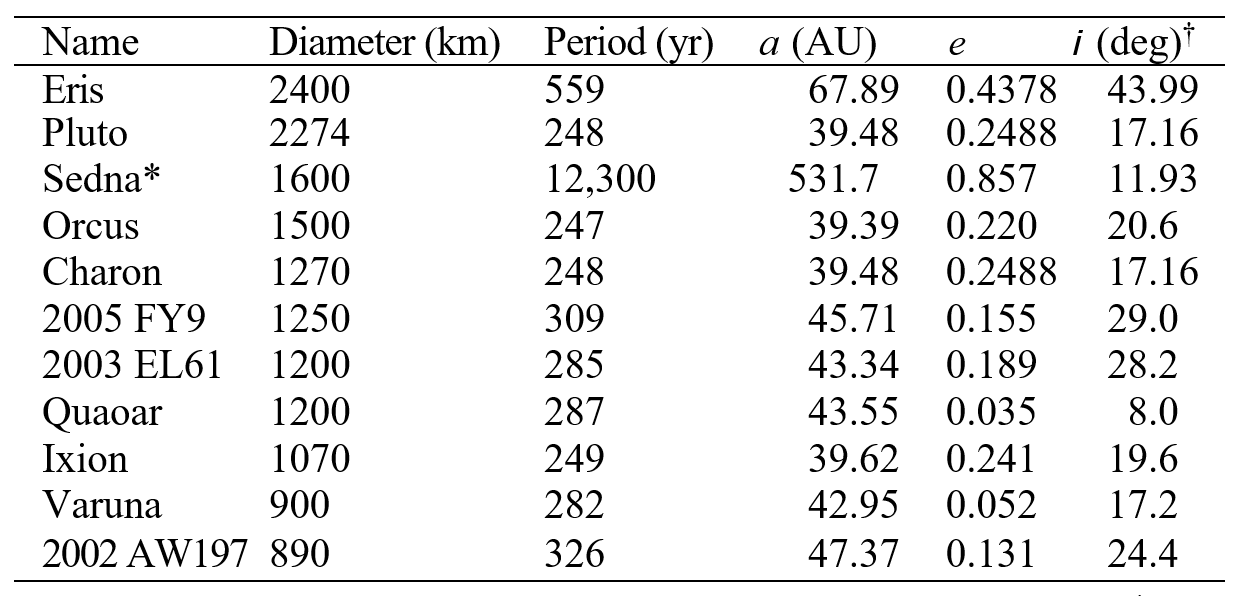
There are many now identified.
TABLE I: A List of the Largest Known Kuiper Belt Objects as of May 2006. Many of the listed diameters are quite uncertain.
The following is an update that covers some of the discoveries in the larger moons of the outer planets in the solar system. All excerpts are from this Source. Bold text are my added emphases.
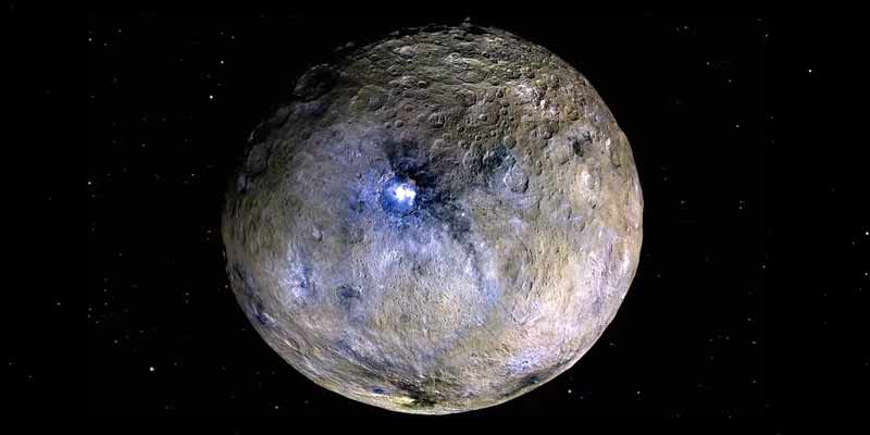
Frozen ocean world discovered between Mars and Jupiter
Astronomers have long been intrigued by the makeup of the asteroid belt’s largest body. When it was first spotted in 1801, Ceres appeared dry and rocky, its surface marked by craters and dents. For years, that view held strong. Most believed that Ceres was less than 30% ice and too solid to have held much water.
That idea may now be outdated. Fresh findings suggest Ceres could be far more icy than scientists had guessed. New research points to a frozen past, one where the dwarf planet may have once been a muddy ocean world. The updated theory casts doubt on earlier beliefs about its dry, rocky nature. A team from Purdue University and NASA’s Jet Propulsion Laboratory is behind the breakthrough.
Their study, published in Nature Astronomy, proposes that up to 90% of Ceres’ outer layers could be ice. Instead of solid rock, they believe the crust is dirty ice—formed as a slushy, muddy ocean froze over time.
The findings also support the idea that Ceres was once an ocean world, similar to Jupiter’s moon Europa or Saturn’s moon Enceladus, but with a dirtier, muddier composition.
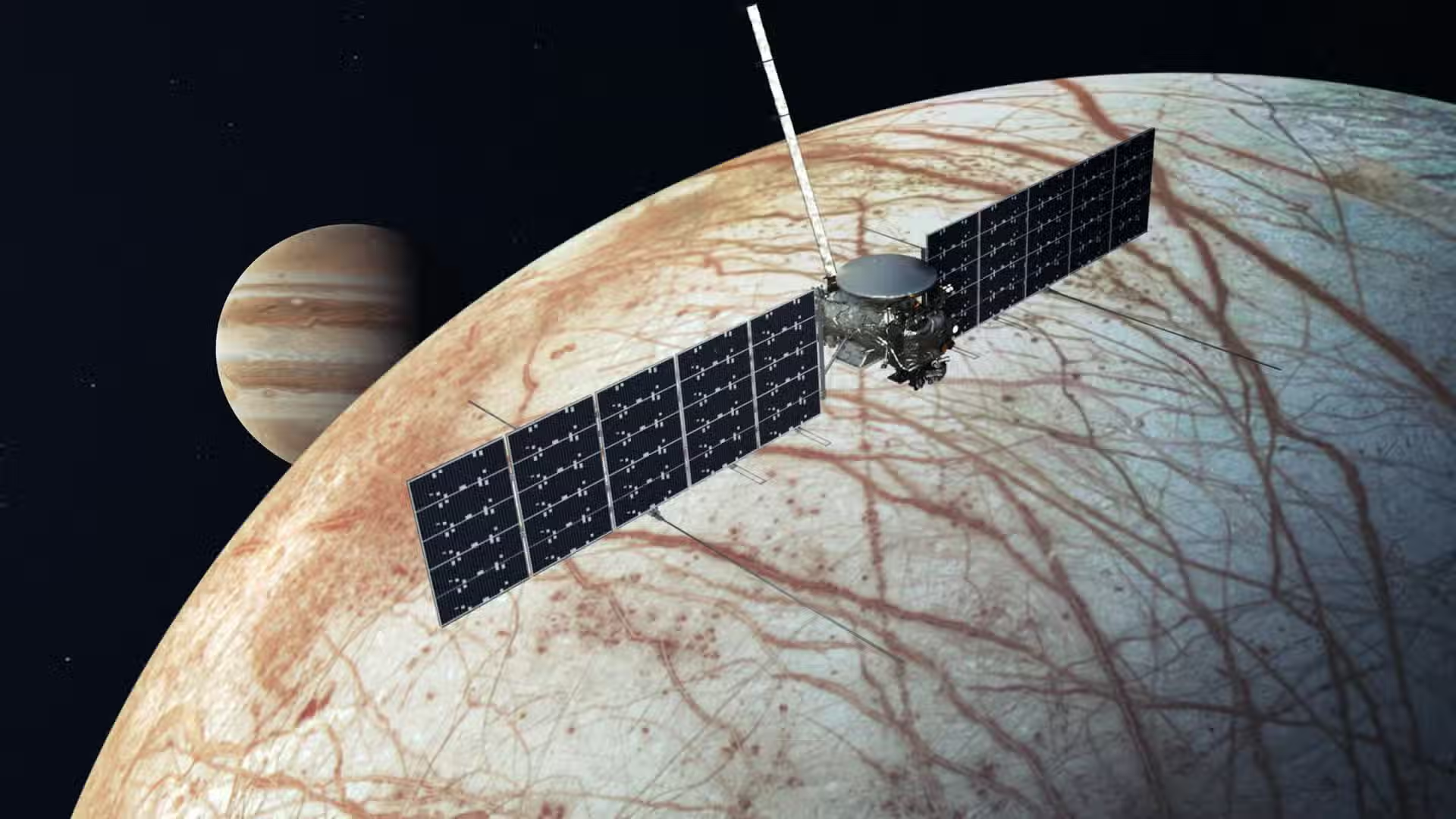
Europa’s subsurface ocean
Many objects in the solar system, like Ceres, contain significant amounts of water in various forms.
Europa, one of Jupiter’s moons, has a vast subsurface ocean covered by an icy shell. This ocean is believed to contain 2-3 times the volume of Earth’s oceans. Observations from the Galileo spacecraft revealed a smooth, cracked surface, indicating liquid water beneath. Europa’s magnetic field measurements further support the presence of a salty ocean, making it a prime candidate for life due to potential interactions between the ocean and the rocky mantle.

Sori remarked on the significance of Ceres as a target for planetary exploration. As the largest asteroid and a potential ocean world, Ceres was a compelling candidate for a spacecraft mission. Its proximity to Earth and unique composition make it a valuable point of comparison to the ocean-hosting moons of the outer solar system, like Europa and Enceladus.
“To me the exciting part of all this, if we’re right, is that we have a frozen ocean world pretty close to Earth,” Sori said. “Ceres may be a valuable point of comparison for the ocean-hosting icy moons of the outer solar system, like Jupiter’s moon Europa and Saturn’s moon Enceladus. Ceres, we think, is therefore the most accessible icy world in the universe. That makes it a great target for future spacecraft missions.”
The bright features on Ceres’ surface are thought to be remnants of its frozen ocean, now mostly or entirely frozen solid and erupted onto the surface. These regions could provide valuable material for future missions to collect samples from an ancient ocean world. As Sori puts it, “We have a place to collect samples from the ocean of an ancient ocean world that is not too difficult to send a spacecraft to.”

Ganymede’s subsurface ocean
Another of Jupiter’s moons, Ganymede, holds a subsurface ocean beneath a thick ice shell. This ocean is thought to be around 100 km deep, with several layers of ice and liquid water. Galileo spacecraft data revealed a magnetic field and auroras, indicating a conductive, salty ocean.

Titan’s unique water story
Saturn’s moon Titan has a unique water story. Beneath its surface lies a liquid ocean, likely 50-100 km deep, covered by an icy crust. Titan also hosts surface lakes and seas of liquid methane and ethane, adding a layer of chemical complexity.
Data from the Cassini mission indicate that Titan’s subsurface ocean is in communication with its surface, providing a dynamic environment where prebiotic chemistry might occur.

Pluto, too, may harbor a subsurface ocean beneath its icy crust, estimated to be 100 km thick. Data from the New Horizons mission reveal surface features indicating past or present liquid water. Thermal models suggest this ocean could remain liquid due to insulation from gas hydrates and internal heat from radioactive decay.
Now moving farther out to the Kuiper Belt, which is actually observed but the hypothesized Oort Cloud is not observed. The Oort Cloud is a fictious rescue device to save the 5-billion-year-old-solar-system paradigm. I say this because the old-universe believers need a reservoir of comets that can supply comets to the solar system over the alleged timescale of 5 billion years. But because the universe and hence the solar system is less than 8,000 years old no such rescue device is needed.
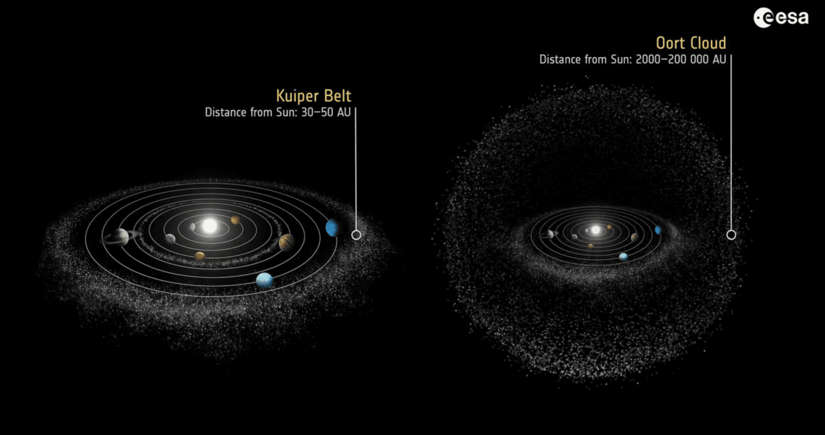
Kuiper Belt and Oort Cloud objects
Finally, the Kuiper Belt and Oort Cloud objects, distant icy bodies on the fringes of the solar system, contain significant amounts of water ice.
Observations from missions like New Horizons reveal icy surfaces and occasional signs of sublimation. These objects are ancient reservoirs of water ice, offering invaluable insights into the conditions of the early solar system and the distribution of water throughout it.
All observations are of Kuiper Belt objects, but ironically a smaller version of the Oort Cloud could be biblical representing the outer limits of the “Waters Above” in the solar system. But of course, if it was ever discovered to exist, it would not be connected to any rescue device for the supply of comets over billions of years.
What I have presented here is just a small but recent sampling of discoveries, all of which support the expected water/ice content of celestial bodies in the outer regions of the solar system. This is further confirmation of the Genesis biblical creation account.
Related Reading
- The Physics of Creation | Day 1
- The Physics of Creation | Day 2
- The Physics of Creation | Day 3
- The Physics of Creation | Day 4
- The Physics of Creation | Day 5
- The Physics of Creation | Day 6
- The Physics of Creation | Day 7
- The Physics of the Curse
- The Physics of the Global Flood
Free Subscribers
Subscribe to our Newsletters as a Free Subscriber and be notified by email. Just put your email address in the box at the bottom of your screen.
You’ll get an email each time we publish a new article. It is quick and easy to do and totally free. You only need do it once.
Premium Subscribers
Subscribe to our Newsletters as a Premium Subscribers at $5 USD/month or $30 USD/year (you choose).
Paid Premium Subscribers will get exclusive access to certain content I publish. That will only cost you a cup of coffee per month.
Also you’ll be able to download, for free, a PDF of my book Apocalypse Now and also a PDF of my book Physics of Creation The Creator’s Ultimate Design for Earth.
You can download them from the link below.
This is how you can support my work. I have been publishing this website for 10 years now and up to 2024 I never asked for any support.
Press the button “Premium” on the front page to find a list of Premium content. Thanks so much to all supporters.
At a minimum, please join as a Free Subscriber. It’ll cost you nothing. It may also help me beat the shadow banning of some posts.