
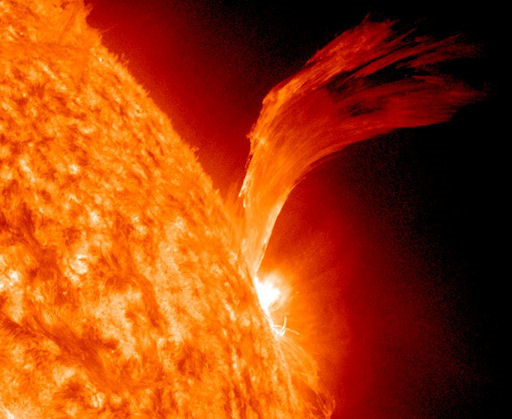
Over the past 10 years I have been writing and talking about the coming Grand Solar Minimum. But it is possible that the sun’s activity is already changing from that expected and we may be headed into warmer periods as we progress through solar cycle 25. But it may take quite a few more years of observations before this is really understood.
In some areas weather reports seem to be indicating warmer weather than expected from decreasing solar activity in cycle 25 as compared to cycle 24. But it will not be clear for a long time, probably another decade, as to weather we are heading into warmer weather or still going into colder weather and a mini ice age.
The following is excerpted from Solar Activity: Cycle 25 Surpasses Cycle 24
Over the past two decades, solar activity has been characterized by an extended solar minimum spanning two solar cycles, known as the Clilverd Minimum. This phenomenon is currently affecting the climate, but before we can understand its impact, we must address the significant discrepancy between the solar effects observed in paleoclimate proxy records and modern observations. The relationship between solar signals and climate response is complex and not fully understood. However, there is substantial evidence from models and reanalyses that the relationship exists. A recent hypothesis is that the solar signal modulates heat and moisture transport to the Arctic, which explains its relatively small effect during a single solar cycle. However, when an anomaly in solar activity persists over several cycles, as it did during the 70-year modern solar maximum, its effect accumulates and has a large impact on the planet’s energy budget. Understanding this mechanism is critical to understanding the overall impact of solar activity on our climate.
Current Solar Activity
The monthly sunspot number for June 2023 reached 163.4. While this figure may be revised slightly, it’s likely to stand as the highest number seen in over two decades, since September 2002. Solar Cycle 25 is relatively young, only three and a half years old, which means there are ample opportunities over the next three years to surpass this month’s 20-year record. Based on recent data, it seems very likely that Solar Cycle 25 will surpass Solar Cycle 24 in terms of activity.
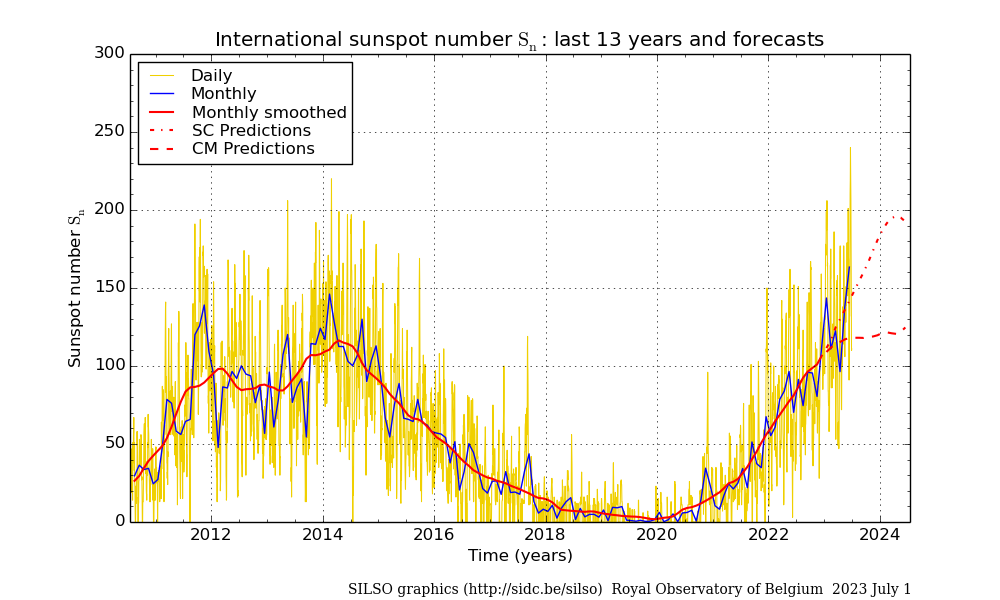
Figure 1. Daily and monthly sunspot numbers over the past 13 years, as provided by SILSO.
Both solar cycles 24 and 25 show significantly low activity compared to the average of the last 300 years. Together they represent an extended solar minimum, recently proposed to be named the Clilverd Minimum.[1] This name derives from a paper published in 2006 by Mark Clilverd and colleagues, in which they successfully predicted the occurrence of this event.[2]
Contrary to earlier predictions, the likelihood of a solar grand minimum in the 21st century is becoming increasingly remote. Similarly, predictions that the current extended solar minimum would lead to a marked decrease in temperature are incorrect. However, this doesn’t mean that the Clilverd minimum has no effect at all. Changes in solar activity indirectly affect surface temperatures in a complex way. Understanding how these solar variations affect the climate is crucial to identifying their effects.
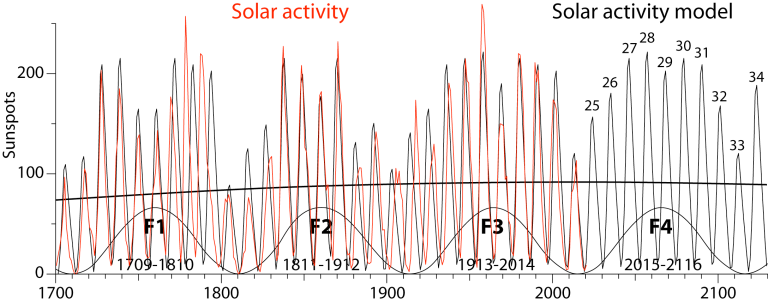
Figure 2. Projected solar activity based on my 2018 model, which relies on long-period solar cycles. The model uses the total number of sunspots in a cycle, rather than peak activity, and assumes regular 11-year cycles. At each point, it estimates the effect of five different long cycles, considering their historical impact on sunspots or 14C records. Four Feynman (100-year) solar cycle periods are indicated at the bottom.
For the rest of this excellent piece https://clintel.org/solar-activity-cycle-25-surpasses-cycle-24/
Recommended Reading
- Book: Apocalypse Now: On the Revelation of Jesus Christ
- Book: Merchants of Death: Global Oligarchs and Their War On Humanity
Follow me
- Telegram.org: @GideonHartnett
- Facebook: Gideon Hartnett
- X (Twitter): @gideon195203
To be notified by email put your email address in the box at the bottom of your screen. You’ll get an email each time we publish a new article.
Click this image to make a secure Donation (Stripe) !





 Bible Science Forum