


We know far more about how to measure time than we do about what time is. Historically a day on Earth was measured from sunset to sunset. That means the length of the 24-hour day – the synodic day – was set by the rotation of the planet, which meant that the same location, with the Sun vertically overhead, came back in alignment to where the Sun was observed vertically overhead the day before. Therefore by definition the rotation speed of the Earth set the length of the day at 24 hours that is the complete day/night cycle.
This definition implicitly assumed that the planet was a good stable time keeper. That is the day before any day was the same length as the day after. That has been the history of time keeping for many thousands of years up until recently. This means the rotation of the planet was used as an accurate and precise clock. Its precision is due to its large unchanging mass and constant angular velocity meaning the magnitude of the Earth’s angular momentum has been essentially constant.
The Genesis chapter 1 creation account demarcates the days of creation as 6 x 24-hour days, defined by the use of ordinal numbers for each day, and the expression, translated from the original Hebrew, of “an evening and a morning”. This use gives a measure of the length of the 24-day resulting from by the rotation of the planet. This period of time gives us a measure of the precision of the Earth clock for determining a synodic day.
Since the Sun was not created until the fourth day there is no solar reference point to measure out the synodic day in the first three days. Does that create a problem for biblical creationists? It doesn’t if you understand that the rotation of the planet began from the first day of creation, and secondly that time was created by the Creator independently of the rotation of the planet. The planet’s precise rotation period is a measure of time; it is not time itself.
Reiterating the point that the measurement of time was determined by the highly regular or precise period of rotation of the planet. That does not define time, it only measures it off. Therefore the existence of the rotation of the Earth does not define what time is, nor was the Sun needed as the reference source to define a 24-hour day during the first 3 days of creation.
In the science of time and frequency metrology, which I spent over 20 years researching and publishing, the nomenclature of certain words is very important. Those words are precision and accuracy. And they are not the same thing.
Precision is defined by the repeatability of a measurement. That is the precision of the measurement device — a clock — is defined according to how well it repeats the unit of time (a pulse, or beat etc) in a sequence. Whereas accuracy is defined according to a predefined reference standard. Just like in popular language we say a clock is accurate if it shows 12:00 noon at the time when the Sun is highest, and inaccuracy is measured by any deviation from that chosen reference value.
A well-used illustration is that of a target like shown in Fig.1. If each time an archer shoots he hits the bullseye, he is said to be both accurate and precise. But if each time he hits a point with all his arrows that is not the bullseye he is precise because he is repeating the shot each time but he is not accurate.

However if the archer hits the target with his arrows grouped around the bullseye, with some but not all in the bullseye, he is said to be accurate but not precise. He is not precise because his shots are not tightly grouped, they are somewhat scattered, and hence not precisely repeated.
The Earth’s rotation period was used as a precise clock from the creation (less than 8,000 years ago) until several hundred years ago when mechanical clocks began to be used. During that period the sundial was used to mark off the time of day during parts of the daylight hours when the sun was not vertically overhead. The accuracy of the time measurement was determined by the sundial clock, but still the planet’s rotation period set the precision.
Early mechanical clocks used a long pendulum because the period of swing of a pendulum is a repeatable measure of a constant unit of time. But those clocks were not portable, except on board large ships where accuracy could be determined from a nautical almanac and astronomical measurements. Such astronomical measurements could give the ship’s captain a latitude measurement but a precise and accurate clock was important to determine the longitude of the ship on the globe Earth. See Fig. 2.

That led to the challenge to invent the equivalent of the land-based long-pendulum longcase clocks but compressed into a much smaller form factor.
Enter John Harrison a self-taught English carpenter and clockmaker who played a pivotal role in solving the problem of determining longitude at sea. He invented the marine chronometer to solve the problem of how to calculate longitude while at sea determined by comparing Greenwich Mean Time (GMT) from the chronometer, and the time at the current location of the ship found from astronomical observations of celestial bodies.
He eventually invented 4 chronometers and finished his first chronometer in 1730, which technically won the King’s prize of £20,000 (valued at £4 million in 2025) but he failed to collect it from the British Parliament due to the politics of the time. He was partly compensated after a long period of time.
Harrison’s development of marine chronometers revolutionized navigation and greatly increased the safety of long-distance sea travel.
Harrison’s journey began with the creation of a series of precision longcase clocks, which achieved an inaccuracy of one second in a month, far better than any clocks of the time. He then aimed to devise a portable clock that could keep time to within three seconds a day, which would be far more accurate than even the best watches of the time. The accuracy of those clocks was determined with reference to Greenwich Mean Time (GMT) at 0° longitude (by convention) based on astronomical measurements.
Harrison’s first marine timepiece, H1, was tested on a voyage to Lisbon and showed promise, although it was not without its challenges. Harrison continued to refine his designs, creating H2, H3 (Fig. 3), and eventually H4.

The H4 (Fig. 4), which resembled a large pocket watch, was particularly significant due to its accuracy and reliability (precision). It was tested on a voyage to Jamaica and performed well, leading to its recognition as a solution to the longitude problem.

Despite initial resistance from the Board of Longitude, Harrison’s work eventually gained recognition, and he received some compensation for his contributions. His innovations were crucial in ensuring the accuracy of his timepieces under the challenging conditions of sea travel.
You may see Harrison’s clocks, including H1, H2, H3, and H4, at the Royal Observatory in Greenwich, where they are recognized as some of the most important timepieces in history.

A recommended good read on the Harrison story is the book Longitude: The True Story of a Lone Genius Who Solved the Greatest Scientific Problem of His Time by Dava Sobel (1995). I’ve read it and recommend it.
With advancements in electromagnetics and radio communications the problem of transmitting accurate reference time signals around the world was solved and GMT was established across the globe this way.
I remember when I was young the Australian government radio broadcaster, the ABC, sent a time pulse over the radio at an exact time referenced back to Greenwich. The idea was to set your mechanical clocks by that daily time signal. No doubt the stock market and other trading platforms start times were referenced to the Greenwich-time signal.
By the 1970s electronic computers were developed and they required precise time references. The quartz crystal oscillator derived its regular pulse from an electro-mechanical oscillation in a slice of crystalline quartz. This invention quickly reduced the size of a timepiece, but still the clock needed a reference back to GMT for accuracy. It was very precise but accuracy could only be determined from a reference to the established time standard at Greenwich.
What was that GMT reference? It was still based on astronomical measurements, which means the rotation period of the planet to determine the 24-hour day.
You may have heard of the mythical story wherein the claim was made that NASA had proved that there was a missing 24-hour period from the biblical accounts of Joshua (Joshua 10:12–14) and Hezekiah (2 Kings 20:8–10)?
Joshua needed more time to finish a battle and God stopped the Sun from going down for nearly a day. From that story the claim is that it was just short of 24 hours, thus 40 minutes short, which can be found in the story of Hezekiah.
In that story Hezekiah asked for and saw the shadow on the sundial go back 10°, which is 40 minutes of time based on the globe Earth. Every 15° of longitude is equal to 1 hour of time as the Earth rotates with respect to the Sun (360° in a circle). Hezekiah’s clock was a sundial, which is intrinsically linked to the rotating Earth as a clock.
The claim that NASA proved, specifically the “missing day,” is a persistent urban legend that has been widely circulated but lacks any credible evidence. According to various sources, the story suggests that NASA scientists encountered a discrepancy in their calculations, which they attributed to the biblical events surrounding Joshua and Hezekiah.
The story is often attributed to Harold Hill, a consultant in the space program, who claimed that NASA scientists discovered a “missing day” in their calculations. However, no credible documentation or evidence supports this claim, and NASA has explicitly denied any involvement in such a discovery. Curiously, the story predates NASA’s existence, with similar narratives appearing as early as 1690, long before the advent of computers.
Computers cannot independently discover such discrepancies. They rely on human input and cannot “know” anything beyond the data provided. Furthermore, the story’s details, such as the exact timing of the events and the method of discovery, are inconsistent and lack scientific basis.
Additionally science cannot prove anything. It can only disprove a hypothesis.
From time to time, one hears that NASA computers have proved the account of the unusual day that accompanied the Battle of Gibeon found in Joshua 10:12–14. This marvelous little story about NASA computers began circulating in the late 1960s and early 1970s, during the heyday of the Apollo program.
According to the story, in preparation for the Apollo moon landings, a computer at NASA calculated the positions of the earth, moon, and other solar system bodies with great precision far into the past and future. This computer program produced a glitch in the fifteenth century BC, a glitch caused by solar system bodies not being in their correct positions, indicating that nearly a day was missing from time. An additional 40 minutes also was missing several centuries later, so that the total missing time was one full day.
This brings me to the point that for a clock to have accuracy you have to have an agreed upon reference that determines accuracy and upon which all other clocks are referenced.
In order to determine if such a 24-hour period was missing the programmers would have had to have known the astronomical locations of the Sun-Earth system back to the 15th century BC. How could they know that without a reference to the positions of the celestial bodies in the solar system before that day began? Of course it is impossible. This is the problem of historical measurements in general. No past measurements can be made in the present. It is nonsensical to say so.
Thus past time estimates are all based on proxies (e.g. Oxygen-isotope ratios in ice-cores) where a generous amount of assumptions from the researchers’ biases are applied. Their biases or belief systems are why most modern-day scientists cannot believe that the solar system and the rest of the universe are less than 8,000 years old, which is the most anyone could get from the recorded genealogies in the Genesis account. There the time references are the historical documents which recorded the generations after Adam.
Eventually the definition of time (really the “second”) was changed from the fraction (1/3600) of an hour based on the rotation of the planet to an atomic reference standard. A certain transition in a Caesium-133 atom was chosen. This was concurrent with the early developments that led to a caesium atomic clock. Thus the frequency of the particular chosen transition defined the second.
By definition, radiation produced by the transition between the two hyperfine ground states of caesium-133 (in the absence of external influences such as the Earth’s magnetic field) has a frequency exactly 9,192,631,770 Hz. That value was chosen so that the caesium (Cs) second equalled, to the limit of measuring ability in 1960 when it was adopted, the existing standard ephemeris (astronomical) second based on the Earth’s orbit around the Sun.[1]
Fast-forward to today. Atomic clocks have advanced enormously in both accuracy and precision. But still the second is defined by the frequency of the Cs hyperfine transition. Rubidium and other atomic transitions are also used as secondary frequency standards, but Cs remains the primary standard.
By defining the second we also define the canonical 2-way speed of light in a vacuum (c). Thus it is not fundamental — not a measured quantity — but a derived value traceable back to the Cs hyperfine transition that defines the second. That means the speed of light (c) is fixed and unchangeable. Any changes need to be looked for in drift of the second, or in dimensionless constants, like the fine structure constant (α) for example, which experimentally is looked for by comparing a Cs clock with another atomic clock using a different species (e.g. Rubidium (Rb)).
Once global navigation systems (GNS) like GPS were set in place, reference time pulses sent by radio communications were superseded. Each of the satellites in the GNS systems carry on-board a compact Rb atomic clock, which is referenced to an Earth-based Cs standard. Then the GNS solution for any receiver on the globe permits a calculation of the position of the receiver to centimetre precision.
The GNS also provides a universal time coordinate (UTC), which is linked to GMT time for historical reasons. But UTC does not need any reference to GMT. The precision of UTC depends on the hardware and the Cs master clock. By definition accuracy is absolute. But experimentally accuracy errors are evaluated when a new atomic clock is developed.
In my research career I worked on an ultra-precise cryogenic sapphire “clock”. I put the word “clock” in quotes because it is not truly a clock as it only provides an ultra-stable microwave signal. It is not connected to the Cs-133 hyperfine transition, and thus cannot be called an accurate clock.
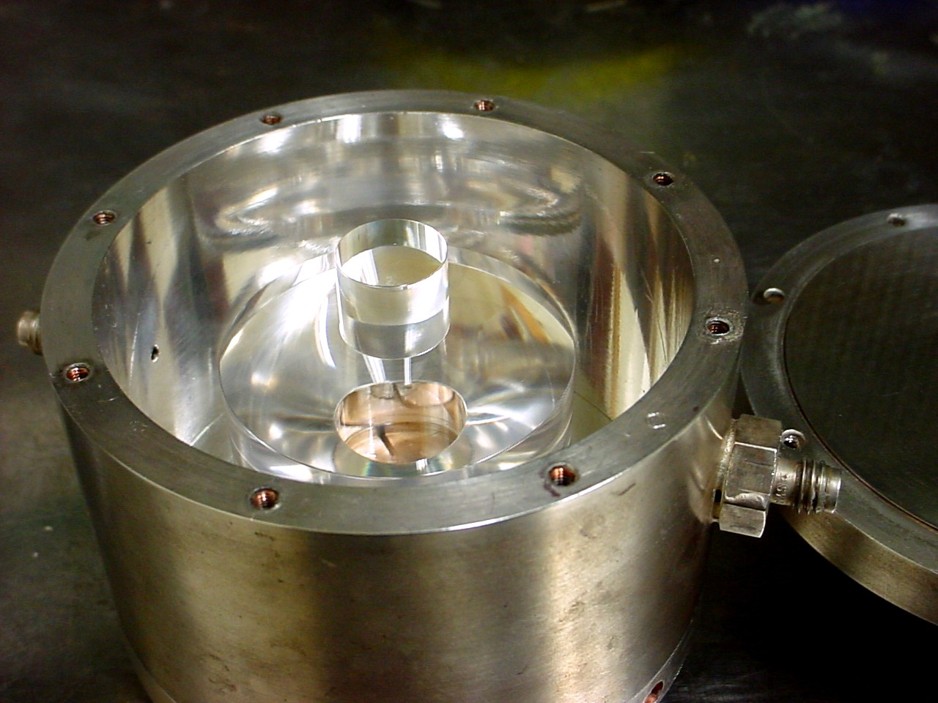
The “sapphire” clock is based on a pure single crystal of sapphire cooled to about 267°C below zero, or 6 K. That low temperature keeps the dimensions of the crystal very stable and a whispering gallery mode electromagnetic standing wave determines the “clock” frequency at about 10 GHz.
The “sapphire” clock perhaps is the most stable signal reference commercially available with a fractional frequency instability less than 1 part in 1015 over averaging times less than 100 seconds.
It is not atomic so we call it a classical clock. It behaves like a grandfather clock with a pendulum arm a kilometer long.
From all of the above, I hope it is clear that time is not fundamentally linked to the rotation of the planet Earth or any other celestial motions. Time is an intrinsic property of the creation of the universe (Genesis 1:1).
We have made enormous advances in the measurement of time, and I’ve only covered it very briefly, but the question still remains: what is time?
One answer might be: “Time is what keeps everything from happening at once.”
The quote and its various variants are often attributed to Albert Einstein, but its origins are more complex. The earliest known source of this idea is a 1921 short story by Ray Cummings titled “The Time Professor,” where the line “Time is what keeps everything from happening at once” appears. The quote has been misattributed to various figures, including physicist John Archibald Wheeler, who cited it in a 1990 publication, though he did not originate it.
Before God created time, space and energy He alone eternally existed as the Self-Existent One. Simultaneously with His creation of the universe He created space, time and energy. The latter we use to make all measurements of the passage of time. That we can definitely say.
The length of time from creation to now needs not be any longer than 8,000 years give or take. It is consistent with a straightforward reading of the biblical text when you include the Septuagint genealogies.[2] That age is a far cry from the bogus claims of the evolutionists and big bang cosmologists.
[1] Markowitz, W.; Hall, R.; Essen, L.; Parry, J. (1958). “Frequency of Cesium in Terms of Ephemeris Time”. Physical Review Letters. 1 (3): 105. Bibcode:1958PhRvL…1..105M. doi:10.1103/PhysRevLett.1.105
[2] Henry B. Smith Jr, The Case for the Septuagint’s Chronology in Genesis 5 and 11, https://digitalcommons.cedarville.edu/icc_proceedings/vol8/iss1/48/
Related Reading
- Obliquity of Earth’s Axis | How Has It Changed?
- Can We Know the Year of Noah’s Flood?
- Earth | A Sphere By Design
- An Essay: It’s About Time
- The Unreality of Time
- Time As a Geometric Property of Space
- Stephen Hawking and Imaginary Time
Free Subscribers
Subscribe to our Newsletters as a Free Subscriber and be notified by email. Just put your email address in the box at the bottom of your screen.
You’ll get an email each time we publish a new article. It is quick and easy to do and totally free. You only need do it once.
Premium Subscribers
Subscribe to our Newsletters as a Premium Subscribers at $5 USD/month or $30 USD/year (you choose). Cancel anytime.
Paid Premium Subscribers will get exclusive access to certain content I publish. That will only cost you a cup of coffee per month.
Also you’ll be able to download, for free, a PDF of my book Apocalypse Now and also a PDF of my book Physics of Creation The Creator’s Ultimate Design for Earth.
You can download them from the link below.
This is how you can support my work. I have been publishing this website for 10 years now and up to 2024 I never asked for any support.
Press the button “Premium” on the front page to find a list of Premium content. Thanks so much to all supporters.
At a minimum, please join as a Free Subscriber. It’ll cost you nothing. It may also help me beat the shadow banning of some posts.




 Bible Science Forum
Leave a comment