
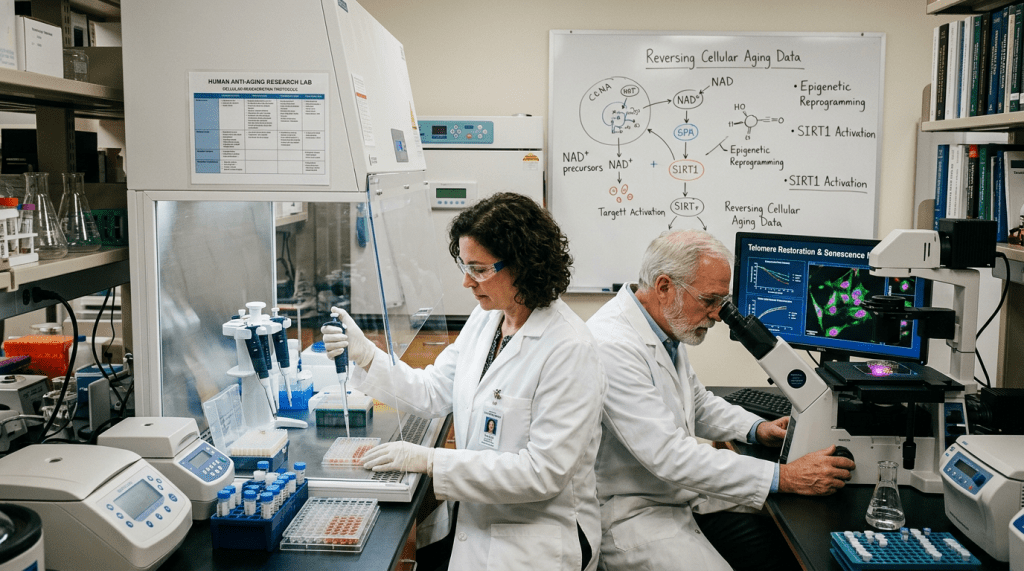
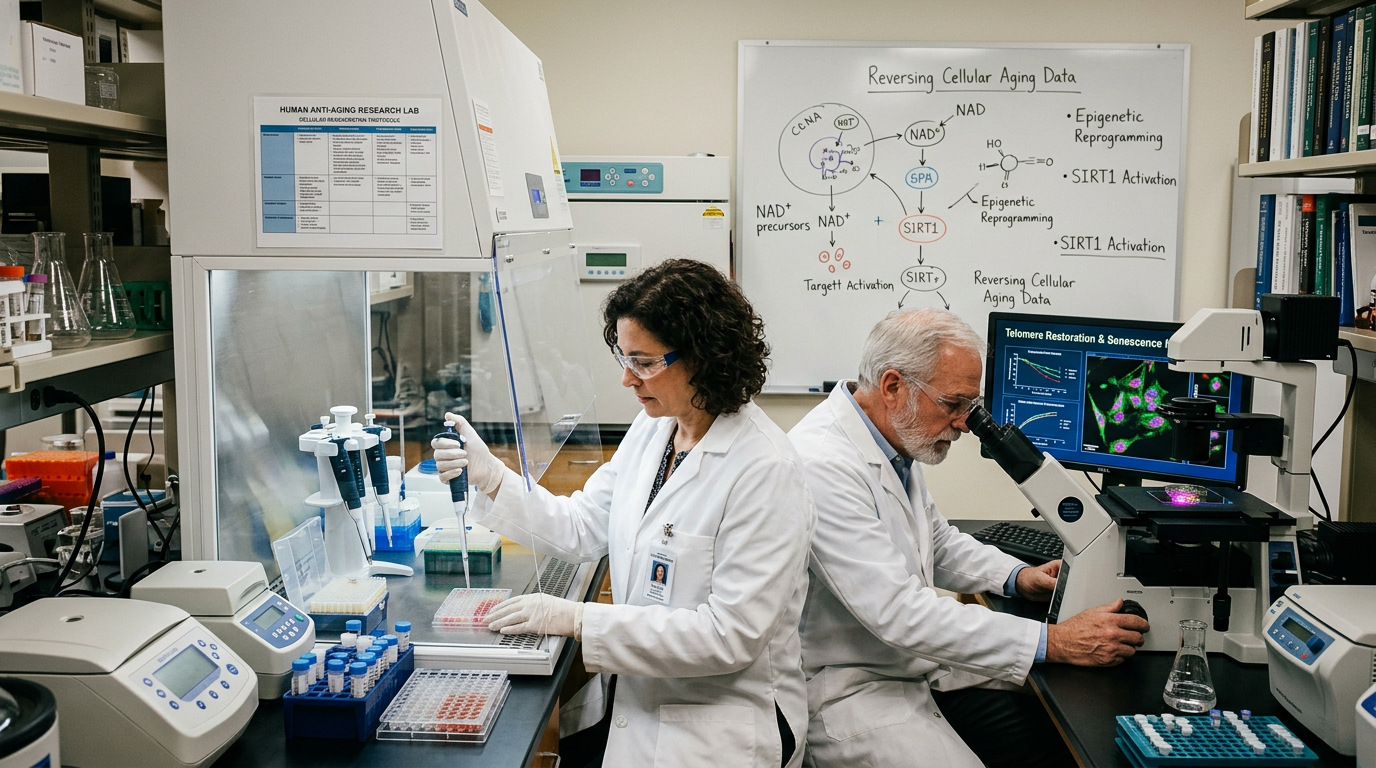
In the pre-Flood world the patriarchs lived to nearly 1,000 years but post Flood the maximum age declined exponentially to about 70 years at the time of King David. That was about 3,000 years ago. We may ask what is the actual maximum age possible for humans now?
In a psalm David wrote:
10 The days of our years are seventy years; and if by strength we live eighty years, yet their pride is labor and sorrow; for it soon passes, and we fly away.
Psalms 90:10 KJ3
Thus 70 years had become the norm. And if you were particularly strong you could have lived to 80. Today, in most Western countries, around 85 is the usual life expectancy.
Somatic mutations are genetic alterations that occur in any body cell (somatic cell) after fertilization, excluding the reproductive germ cells (sperm and egg). Unlike germline mutations, which are inherited from parents, somatic mutations cannot be passed on to offspring and affect only the descendants of the mutated cell within the same organism.
These mutations arise from endogenous factors, such as errors during DNA replication or repair and exposure to reactive oxygen species from normal metabolism, as well as exogenous factors like environmental mutagens (e.g., UV radiation, X-rays, and certain chemicals). They accumulate throughout an individual’s life, contributing to genetic mosaicism and playing a critical role in aging and the development of diseases, particularly cancer.
In a recent study accepted May 19, 2026 for publication in NPJ Aging on the effects alone of somatic cell mutations on aging the authors reported the following:
Somatic mutations accumulate with age and can cause cell death, but their quantitative contribution to limiting human lifespan remains unclear. We developed an incremental modeling framework that progressively incorporates factors contributing to aging into a model of population survival dynamics, which we used to estimate lifespan limits if all aging hallmarks were eliminated except somatic mutations.
Our analysis reveals fundamental asymmetry across organs: post-mitotic cells such as neurons and cardiomyocytes act as critical longevity bottlenecks, with somatic mutations reducing median lifespan from a theoretical non-aging baseline of 1,759 years to 156 years.
In contrast, proliferating tissues like liver maintain functionality for thousands of years through cellular replacement, effectively neutralizing mutation-driven decline. Multi-organ integration predicts median lifespans of 146–194 years—approximately twice current human longevity.
This substantial yet incomplete reduction indicates that somatic mutations significantly drive aging but cannot alone account for observed mortality, implying comparable contributions from other hallmarks.
Abstract from Efimov, E., Fedotov, V., Malaev, L. et al. Somatic mutations impose an entropic upper bound on human lifespan. NPJ Aging (2026).
The new study from Russia’s Skolkovo Institute suggests that, in theory, we might reach up to 156 years if we could stop all the reversible aging processes. That is, assuming all other aging processes are eliminated, how long would humans live?
The research team asked how long each of our organs could survive if the only factor were somatic mutations, that is, mutations which occur after fertilization, which would include DNA copying errors during normal cell division.
In their paper they asked:
What if we were to eliminate all reversible mechanisms of aging, leaving only irreversible, entropy-driven processes such as somatic mutations? How long
could a human then live?
The choice of baseline mortality risk links to the question: “At what age does aging begin?” Perspectives on this issue vary widely — from aging starting during embryogenesis to the arguments that it begins only when body growth ceases, consistent with disposable soma theory.
Mortality risk curves [figures provided in paper] reveal that the exponential mortality increase typically emerges around age 30 — a threshold coinciding with the commonly recognized onset of middle age. We adopt the age 30 mortality rate as our baseline, which corresponds to median and maximum remaining lifespans of 1,759 and 29,221 years.
This choice reflects the mortality risk of a typical early adult characterized by good health, low incidence of age-related pathologies, and full societal engagement. At this age, individuals are generally active, employed, and routinely exposed to diverse extrinsic hazards including car accidents, drug abuse, occupational hazards, infectious diseases, etc., thus embodying composite baseline mortality risks without the influence of aging.
So without all other causes of aging the median life expectancy for a 30 year old is a long time but it is not inconsistent with the ages of the patriarchs who, before the Flood, lived between 777 and 969 years (excluding Enoch who didn’t die).
The greater age one chooses to base life expectancy on the greater the decrease in life expectancy due to somatic gene mutations. Aging increases your risk of mortality, until eventually the survival rate for everyone drops to zero.
The researchers found that not all organs age the same. Your liver could live for thousands of years longer than you do but your brain and heart set a limit because they do not regenerate like the liver does. Neurons in your brain and cardiomyocytes in your heart do not get renewed. They are post-mitotic, mature cells that have permanently exited the cell cycle and are no longer capable of undergoing mitosis (cell division).
In their model, the team turned on and off various aging processes and looked at the expected lifespan of our organs.
From their mathematical modeling, which only included somatic mutations, the researchers found that our maximum possible lifespan is limited by certain organs.
“The key finding of the study is the discovery of substantial differences between tissue types,” Evgeny Efimov, author of the study, and research intern at the Skoltech Biomed Technologies Center and a researcher at AIRI, explained in a statement.
“Neurons and cardiomyocytes, which lack the ability to divide, turned out to be the main limiting factors: when all other causes of aging are eliminated, somatic mutations alone reduce the theoretical median lifespan from 1,759 years (for a hypothetical non-aging human organism) to 156 years.”
“At the same time, tissues with high regenerative capacity—such as the liver—can maintain their function for thousands of years through continuous cell renewal, effectively neutralizing the negative impact of mutations.”
“Our study shows that somatic mutations contribute significantly to aging, but they cannot by themselves explain the observed mortality,” co-author Dmitrii Kriukov, a research scientist at the Skoltech Biomed Technologies Center and a senior research scientist at AIRI, added.
“This means that other aging mechanisms—such as loss of proteostasis, mitochondrial dysfunction or epigenetic changes—contribute comparably to limiting lifespan.”
“In this context, translational cell therapy aimed at neuronal replacement may represent our only viable path to 150+ year lifespans, even assuming all other hallmarks are mitigated,” they write.
Modern medical science has made significant progress keeping people alive, that is, in extending human lifespans. Yet according to this new research the maximum median human age ranges between 146 to 194 years, limited by somatic mutations, and depending on the inter-organ dependencies on aging.
Somatic mutations are driven by entropic forces. That is, thermodynamics. Copying errors and breakages during DNA replication. The 2nd Law of Thermodynamics describes the inexorable force tending to create chaos. That chaos leads to mutations on the body’s somatic cells which accumulate during our lifetimes. Yet the study suggested that it is not the only ageing process.
All species possess telomeres, structures to protect the terminal regions of chromosomal DNA from progressive degradation and ensure the integrity of linear chromosomes by preventing DNA repair systems from mistaking the very ends of the DNA strand for a double-strand break.
The telomeres shorten with each cell division and the loss of vital genetic information from the cell’s chromosome after multiple divisions determines the lifespan of cells. This continuous shortening of telomeres with each replication in somatic cells may play a role in aging.
Consequently a new field of research has developed in investigating increasing human lifespan by changing the length of telomeres and reversing their shortening.
However only the omniscient Creator can repair the entropic mutational degradation in somatic cells, reverse telomere shortening, and repair all other sources of aging with His sustaining power and that may be coming soon with His New Heaven and New Earth.
The only sure, avoiding-hellfire way of increasing your lifespan, in fact, true immortality, is entering the spiritual kingdom of God through Jesus Christ, who is the door.
9 I am the door. If anyone enters through Me, he will be saved, and will go in, and will go out, and will find pasture.
John 10:9 KJ3
The door is a metaphor for Christ. He is the Good Shepherd who uses His body as the door to the sheepfold. He provides life in His kingdom (the pasture) to all those who will come. They will be saved which means given eternal life. The phrase “will go in, and will go out, and will find pasture,” symbolizes the spiritual security and sustenance only He can provide.
- Ancient Human Longevity and Its Rapid Decline
- Age as a Quality Factor of Human Life After the Flood
- What Happened After the Flood? Why Did Lifespans Decrease Rapidly?
- Beyond Death | Taxation and an Absolute Limit to Human Lifespan
- Human Lifespans | What Can the Ages of the Patriarchs Tells Us?
- Understanding the Age of the Earth from a Young Earth Perspective
- The Sustaining Power of the Creator
Free Subscribers
Subscribe to our Newsletters as a Free Subscriber and be notified by email. Just put your email address in the box at the bottom of your screen.
You’ll get an email each time we publish a new
Premium Subscribers
Subscribe to our Newsletters as a Premium Subscribers at $5 USD/month or $30 USD/year (you choose). Cancel anytime.
Paid Premium Subscribers will get exclusive access to certain content I publish. That will only cost you a cup of coffee per month.
Also you’ll be able to download, for free, a PDF of my book Apocalypse Now and also a PDF of my book The Physics of Creation The Creator’s Ultimate Design for Earth.
You can download them from the link below.
This is how you can support my work. I have been publishing this website for 10 years now and up to 2024 I never asked for any support.
Press the button “Premium” on the front page to find a list of Premium content. Thanks so much to all supporters.
At a minimum, please join as a Free Subscriber. It’ll cost you nothing. It may also help me beat the shadow banning of some posts.




Leave a comment