
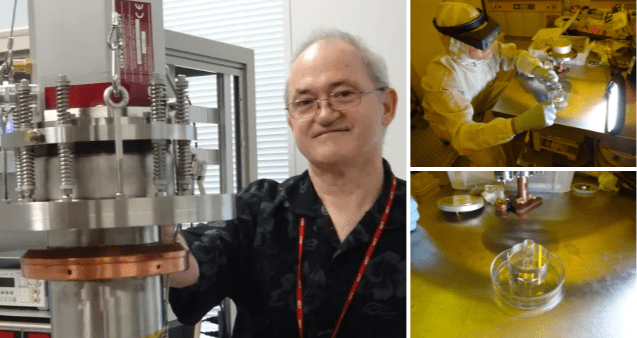
I spent a few decades of my life working in experimental physics research. You can find information on that here. The majority of my time was spent on experimental tests of fundamental physics and developing the equipment to do so. Also I spent a smaller fraction of my time developing new ideas in cosmology. In both areas I published peer-reviewed papers in secular research journals.
These lines of research may be divided between what we could call “science” and “not science”. Here I define “science” as the search for knowledge that comes from repeatable experimentation. We perform operations on our experiments and test our theories. In principle any experiment could be repeated by anyone else and they should get the same result. Or they may refute the results we got.
This activity is often called operational science. It is not the same “science” as used in cosmology. The latter falls into the category of what we should call historical or forensic science. In that case, theories are proposed to explain the observed facts but there are potentially a plethora of theories that explain the same facts and we cannot determine which is the correct theory. This is because cosmology is underdetermined. And that is its fatal weakness.
By this definition cosmology is not science. It is not science in the sense that we cannot interact with the universe and test our theories to determine a singular correct description. We can propose and develop different theories and see if the theory aligns with observations but we cannot rule out other possibilities because we cannot interact with the universe. We have to just accept some facts as a given. This means it is not operational science. And leading cosmologists agree with me.
That barrier to knowledge, some argue, is cosmology’s Achilles’ heel. ‘Cosmology may look like a science, but it isn’t a science,’ says James Gunn of Princeton University, co-founder of the Sloan survey. ‘A basic tenet of science is that you can do repeatable experiments, and you can’t do that in cosmology.’
‘The goal of physics is to understand the basic dynamics of the universe,’ [Michael] Turner says. ‘Cosmology is a little different. The goal is to reconstruct the history of the universe.’ Cosmology is more akin to evolutionary biology or geology, he says, in which researchers must simply accept some facts as given.
Cho, A., A singular conundrum: How odd is our universe? Science 317:1848–1850, 2007. (my emphases added)
That type of activity, which includes a lot of astrophysics, is not science. It therefore should be called historical science or forensic science if we are going to use the word “science” at all. And let’s take note of the warning in scripture, which must not be overlooked.
20 O Timothy, keep that which is committed to your trust, avoiding profane and vain babblings, and oppositions of science falsely so called: 21 Which some professing have erred concerning the faith.
1 Timothy 6:20-21 AKJV (my emphasis added)
The KJV translation used the word “science”, which means “knowledge” but it qualifies it as “falsely so called”. We are told to avoid these profane empty or vain babblings and opposing theories of the falsely named knowledge. The KJ3 translation is very clear on this point.
20 O Timothy, guard the Deposit, having turned away from the profane empty babblings and opposing theories of the falsely named knowledge, 21 which some professing have missed the mark concerning the faith.
1 Timothy 6:20-21 KJ3 (my emphasis added)
The falsely named knowledge at the time of Timothy was Gnosticism which emphasized personal, mystical, or esoteric knowledge of the divine as the primary path to salvation. That is, hidden knowledge, which was available to a privileged few.
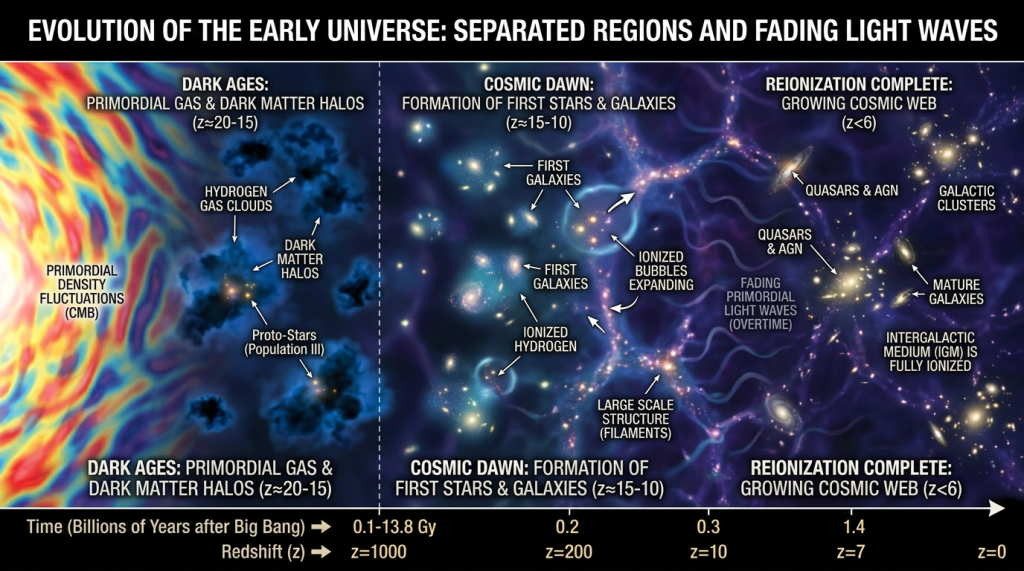
In this time it is not greatly different. Esoteric knowledge is being uncovered by a different priesthood, that of the scientists in “white lab coats”. Their opposing theories of falsely named knowledge include among various theories, that without the Creator, the universe began in a big bang 14 billion years ago, life started out from an abiotic chemical soup in some primordial pond, which then evolved over billions of years to get to where we are today.

Many in the so-called Christian churches have missed the mark concerning the faith on these issues. Missing the mark is sin! Believing and following this foolishness definitely qualifies as missing the mark.
The uncovering of God’s laws by which He controls the universe has been the task of repeatable operational experimental science. That is true whether or not the scientists involved gave God the credit for the laws they discovered. Those laws are His creation.
That is quite distinct from the notion of reconstructing the history of the universe, the Earth and life from bits of forensic evidence available in the present.
The Bible is not a science textbook but when it touches on science it always teaches truth even though limited in detail. Yet through faithful men of God, including Sir Isaac Newton (1643 – 1727), Michael Faraday (1791 – 1867) and James Clerk Maxwell (1831 – 1879), God has revealed to us a better understanding of His created laws.
Sir Isaac Newton was the brilliant physicist and mathematician who revolutionized our understanding of the universe with his laws of motion and universal gravitation as well as optics. Perhaps he was the greatest physicist who ever lived if we define that by his contribution to our understanding of the laws of physics.
Michael Faraday was a chemist and physicist who established the concept of the electromagnetic field in physics. His main discoveries include the principles underlying electromagnetic induction, diamagnetism, and electrolysis. He was one of the most influential scientists in history upon whom many others who followed him built.
Physicist Ernest Rutherford said, “When we consider the magnitude and extent of his discoveries and their influence on the progress of science and of industry, there is no honour too great to pay to the memory of Faraday, one of the greatest scientific discoverers of all time.”
James Clerk Maxwell was a physicist and mathematician who developed the classical theory of electromagnetic radiation, which was the first theory to describe electricity, magnetism and light as different manifestations of the same phenomenon. Maxwell’s equations for electromagnetism, built on Faraday’s research, achieved the second great unification in physics, where the first one had been realised by Isaac Newton.
Albert Einstein kept portraits on his study wall of Isaac Newton, Michael Faraday and James Clerk Maxwell. This highlights the importance of the experimental physics that has developed from the work of these three scientists.
We call the last 400 years the era of modern physics, which extends from Newton to the present. It started with those three Bible believing scientists. It progressed through testing of the developing understanding of fundamental physics. The progress was Bayesian which built on the prior knowledge.
Anywhere the known standard theory at any time failed it became a challenge to understand why. That is where new theories were proposed and tested. But they were not built from scratch, like in a metaphorical vacuum.
Many famous physicists could be named here but two significant theories that developed are instructive. They are relativity theory and quantum theory. Neither came from some form of esoteric knowledge only available to the high priests.
Often times it was one scientist who stepped out and proposed something new based on the prior knowledge in a certain area. That is exactly what Albert Einstein did with his 1905 paper on his special theory of relativity.
The term “special theory of relativity” was not used in his original 1905 paper. The label was later applied to distinguish it from his “general theory of relativity”, which included gravitation. For weak gravitational forces Einstein’s general theory reduced to Newton’s theory of gravitation.
Einstein’s first (special) relativity paper, published on June 30, 1905, was titled “On the Electrodynamics of Moving Bodies,” which laid the foundation for relativity theory. It is worth noting that that theory reduces to Newton’s theory of motion when speeds of moving bodies are much much less than the speed of light.
A key point I am making here is that the prior classical mechanics of moving bodies and gravitation was expanded upon to make better predictions and calculations of moving bodies. So under certain limits the classical theory is sufficient and when the forces and speed are large a relativistic correction is needed.
However there are limits where relativity theory fails and we need to build a better theory to describe motion and dynamics under those conditions. God has not revealed to us any complete physical theory. That would be the ultimate esoteric knowledge which no human has. It is only in the Mind of the Creator.
Each theory we develop is only an approximation to the true complete description. That is why physicists push the limits of their experiments to see how far we can go and if failure occurs what can we propose to correct it. Experimentation always trumps a theory.
That is the robustness of testing a theory in the lab environment where we may design and construct an experiment to get or fail to get a certain response. I have done that, with a team of collaborators, in a lab experiment testing special relativity, that is, Lorentz symmetry to a part in 1018. The results are published in the prestigious journal Nature Communications. No violation of special relativity was detected. Technically no directional differential in the speed of light was detected down to the 10-18 level.
But you can’t do that sort of test in the cosmos, which means cosmological and other astrophysical theories are weak. Even more so is the problem of cosmogony — the origin of the universe — or the origin of stars, galaxies and clusters. There is no way to see that happen by rerunning an event. Therefore those events are in the realm of historical or forensic science.
Does modern gravitational theory, either Newtonian or Einsteinian, work at sub-atomic distance scales? No, it doesn’t, and for that reason several quantum gravity theories have been proposed.
However quantum theory has been very successful in describing the particle zoo in the subatomic realm. Yet debate continues over the interpretation of the mathematical formulation of quantum theory with the wave function. From nearly its inception, one hundred years ago, two camps have been divided over the wave function, which appears to produce only a probability of a certain outcome.
One camp has it as being a useful mathematical construct to describe an experimental outcome, and, the other camp, a hidden variable theory, where an unobserved pilot wave is not probabilistic but deterministic. However in both cases it is the same mathematics and the same experimental results.
Probably the quantum theory of the standard model of particle physics is the most successful physical theory in modern science. Extensions with theories to the Planck length scale are being explored to try to unify particle physics with the general theory on gravitation.
Now, I have left out so much, and so many famous physicists and astronomers, but suffice to say that the state of modern physics with relativity and quantum theory has been one of successive steps involving many experiments. Classical physics theories have been rigorously tested and where they failed they have been modified in light of relativity and quantum theory. These are still works in progress.
The same cannot be said for the cosmogony of the universe. The standard model, the big bang LCDM model, has required the insertion of several major fudge factors to prevent its timely death. The fudge factors — particularly Dark Matter and Dark Energy — are only proposed because there is no other alternative to rescue the model. For the big bang believers it is existential.
For Genesis creation believers there is no need to assume that there was a big bang. The evidence for an expanding universe is at best equivocal and if the universe is not expanding then there was no big bang.
Others have proposed alternative explanations for the redshift of galaxies, and there are many alternatives. The redshift explanation derived from general relativity used to justify an expanding big bang universe has never been successfully tested in a laboratory experiment.
Therefore it is impossible to conclude based on operational science that the universe expanded out of a singularity via a big bang. At best it is a faith claim of historical science and like the cosmologist Michael Turner wrote “researchers must simply accept some facts as given”.
But I don’t accept that. My faith claim is that the Genesis creation as described in the Bible is correct. No amount of modern physics in anyway contradicts that. That is, true science is to be believed but science falsely so-called is to be rejected as profane empty babblings.
True science is God glorifying but fake science, like the big bang cosmology and Darwinian evolution, is God denying. The latter are false and therefore not valid science or knowledge in the first place.
Related Reading
- Operational and Historical Science: What are They?
- Cosmology is Not Science!
- What Can the Bible Teach Us About Science?
- Big Bang Fudge Factors
- Cosmology’s Achilles’ Heel
- Cosmic Mythology: Exposing the Big Bang as Philosophy Not Science
Free Subscribers
Subscribe to our Newsletters as a Free Subscriber and be notified by email. Just put your email address in the box at the bottom of your screen.
You’ll get an email each time we publish a new article. It is quick and easy to do and totally free. You only need do it once.
Premium Subscribers
Subscribe to our Newsletters as a Premium Subscribers at $5 USD/month or $30 USD/year (you choose).
Paid Premium Subscribers will get exclusive access to certain content I publish. That will only cost you a cup of coffee per month.
Also you’ll be able to download, for free, a PDF of my book Apocalypse Now and also a PDF of my book Physics of Creation The Creator’s Ultimate Design for Earth.
You can download them from the link below.
This is how you can support my work. I have been publishing this website for 10 years now and up to 2024 I never asked for any support.
Press the button “Premium” on the front page to find a list of Premium content. Thanks so much to all supporters.
At a minimum, please join as a Free Subscriber. It’ll cost you nothing. It may also help me beat the shadow banning of some posts.





 Bible Science Forum
Leave a reply to Frank Hubeny Cancel reply