
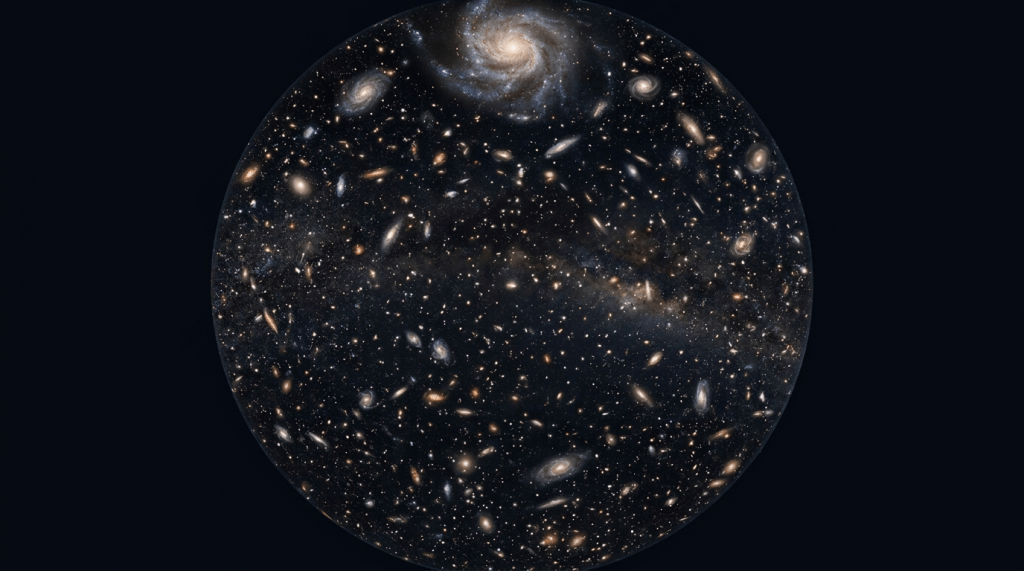
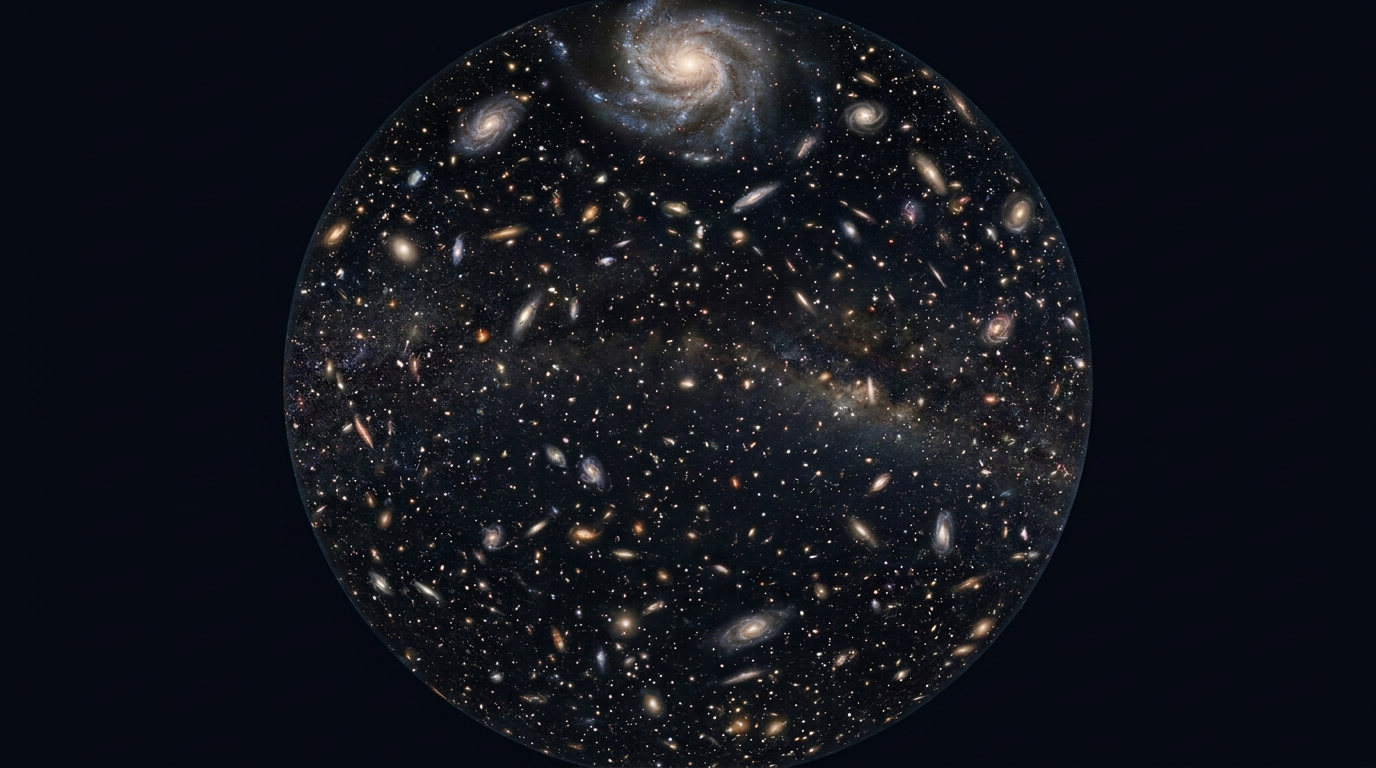
According to the biblical text of Genesis chapter 1 God created the stars, and therefore the galaxies, in the universe on the same day of creation week that He created the Sun and the Moon. And it is usually inferred that those “stars” included the wandering stars also, that is, the planets in our solar system.
By adding together the genealogies of Genesis chapters 5 and 11 we may calculate an historical maximum age of the universe, that is, back to creation. For that age we get approximately 6,000 years if you use the Hebrew Masoretic Text (MT) or approximately 7,500 years if you use the Greek Septuagint Text (LXX). See Understanding the Age of the Earth from a Young Earth Perspective.
As a result the Young Earth Creation (YEC) position, regardless of the source text you prefer, is a universe less than 10,000 years old. That is tiny when compared to the secular age of approximately 13,800,000,000 year age for the universe.
How did they derive that very old age for the universe? Ultimately it came down to the application of mathematical models to their assumed expanding universe.
It was arrived at after a long period of philosophising about the age of the Earth. That included people like James Hutton, a Scottish theologian and amateur geologist, who introduced the notion that the processes in the crust had always been slow and gradual, uniformitarian, hence they took millions of years.
Laplace theorised about the age of the solar system with his nebula hypothesis. That led to others like Lord Kelvin theorising on the time to cool the planet from a hot plasma, which extended Earth’s age out to 20 million years.
Eventually they “looked to the stars”. That came in the form of modelling the universe as an expanding cloud of nebulae (galaxies). In 1927, a Roman Catholic Jesuit priest Georges Lemaître, mathematician and evolutionary cosmologist proposed a model to explain Edwin Hubble’s galaxy redshift-distance relation, which implied an expanding universe. And if it was expanding then a projection back in time meant it must have had an initial creation moment. At that time the age was estimated to be about 2 billion years.
In the same way as Lemaître, Russian atheist Alexander Friedmann proposed a big bang model, a solution he found in Einstein’s General Theory of Relativity. That model is now the standard accepted model for the universe, but the Friedmann-Lemaître model is completely at odds with Scripture.
But globular clusters were a problem. They are bound groupings of ‘old’ stars in our galaxy. Since no known globular clusters display active star formation they were believed to be the oldest objects in the Galaxy; some were even found to be ‘older’ than the Galaxy itself.
From the evolutionary stellar model, ‘ages’ typically were determined as old as 12.7 billion years. Historically, age estimates of globular clusters were greater than the cosmological models allowed for universe itself. However, now with better measurements of big bang model parameters via space telescopes, such as the Hubble Space Telescope, it appears that this issue has been resolved. Now the universe, at 13.78 billion years old, is older than the globular clusters. The cosmological model had to be adjusted with new parameters until the universe was older than these stars.
For more detail see Development of an “Old” Universe in Science!
In that brief history you can see how much modelling has been assumed. So let me ask this question: what actually is observed and what do the scriptures imply when we check our brains not to import assumed models?
Firstly let’s look at the Genesis 1 text on the fourth day of creation.
14 And God said, Let luminaries be in the expanse of the heavens, to divide between the day and between the night. And let them be for signs and for seasons, and for days and years.
15 And let them be for luminaries in the expanse of the heavens, to give light on the earth. And it was so.
16 And God made the two great luminaries: the great luminary [the Sun] to rule the day, and the small luminary [the Moon] and the stars to rule the night.
17 And God set them in the expanse of the heavens, to give light on the earth,
18 and to rule over the day and over the night; and to divide between the light and between the darkness. And God saw that it was good.
19 And it was evening, and it was morning, a fourth day.Genesis 1:14-19 KJ3
The three sections I have highlighted are instructional in regards to the question of age of the universe.
Verse 15 tells us the purpose of the luminaries, and those luminaries include the stars. We know this because are for signs and seasons, for which the stars serve a function not only the Moon. But this verse tells us they are to give light upon the Earth. If the light is going to take billions of years to reach Earth then they cannot illuminate the Earth. The phrase “And it was so” implies God’s command was immediately fulfilled. There was no time delay between command and fulfilment of that command.
Verse 16 uses the phase “the stars to rule the night” which also states their purpose. When there is no Moon visible only the stars can be seen. It is then their very weak light provides illumination on the Earth during the night. Therefore from creation Day 4 the stars did rule the night. If so their light must have reached Earth from very near the beginning.
Verse 17 reiterates God’s purpose for the stars “to give light on the earth”. They would not be able to give any light in the night sky if the light needed thousands, millions, or billions of years to reach the planet from their location in space.
Therefore we may conclude that the creation of all of the trillions of stars in the universe occurred on day four of creation week less than 10,000 years ago, that is less than 10,000 revolutions of our planet around the Sun.
But of course the question arises, how can that be so if most stars in our galaxy are many tens of thousands of light-years away.
Of course a light-year is a distance measure and it is means the distance light would travel in the vacuum of space at a speed of about 299,792 km/s or 186,282 mile/s which is about 1 billion km/hr. That’s fast and it covers a lot of distance very quickly. But what if that is not entirely correct? There is an unstated assumption in there.
We know from the above texts that light from any source in the universe reached Earth in less than a day. In fact, I could argue that the implication of those verses is that it instantaneously reached the Earth upon God’s utterance, when He spoke those stellar bodies into existence.
That means the incoming one-way speed of light from the luminaries, wherever they are, was and is infinite. There was no time delay between the creation of the stars and their light reaching the Earth. And that has been the case throughout all history of the universe.
That is an Earth-centric statement which I have derived from the scriptures Genesis 1:14-19. I write Earth-centric because God’s purpose for Earth is at the centre of His creation. It is only on Earth do we find life and that life has God’s imprint and design upon it. Well, so does everything else about the universe.
Therefore, as explained in other posts on this site, the language of the biblical texts on creation implies infinite inbound one-way speed of light. Because when God spoke it was done instantly. Any putative Earth observer would have immediately seen in the heavens the outcome of God’s creative utterances.
This is a statement about observations, observations of the heavens. And when looking out into space, observers on Earth, that is astronomers, are limited by what they actually observe and measure.
Even with the largest Earth-based telescopes including optical telescopes like Rubin and other ELTs, or, space-based telescopes including the James Webb (Infrared), Roman (Infrared), Euclid (Infrared), Hubble (Visible), Chandra (X-ray) and FERMI (Gamma ray) telescopes what astronomers see is limited by how many photons their telescopes collect. In brackets I have included the part of the electromagnetic spectrum the telescopes are tuned to. I also included the Nancy Grace Roman Space Telescope though it is still planned for launch in 2027. See Fig. 2.

Also shown in Fig. 2 are ALMA (Millimetre-wave) and the SKA (Radio-wave) Earth based telescopes. So when I use the term telescope I mean all types covering the whole electromagnetic spectrum.
So what is actually observed by astronomers through their telescopes? Electromagnetic photons are received and enter their detectors. Depending on the wave-band they “see in” the detectors are of different types but are tuned to those particular wave-bands of energy.
The following is a case in point: the Euclid space telescope mission.
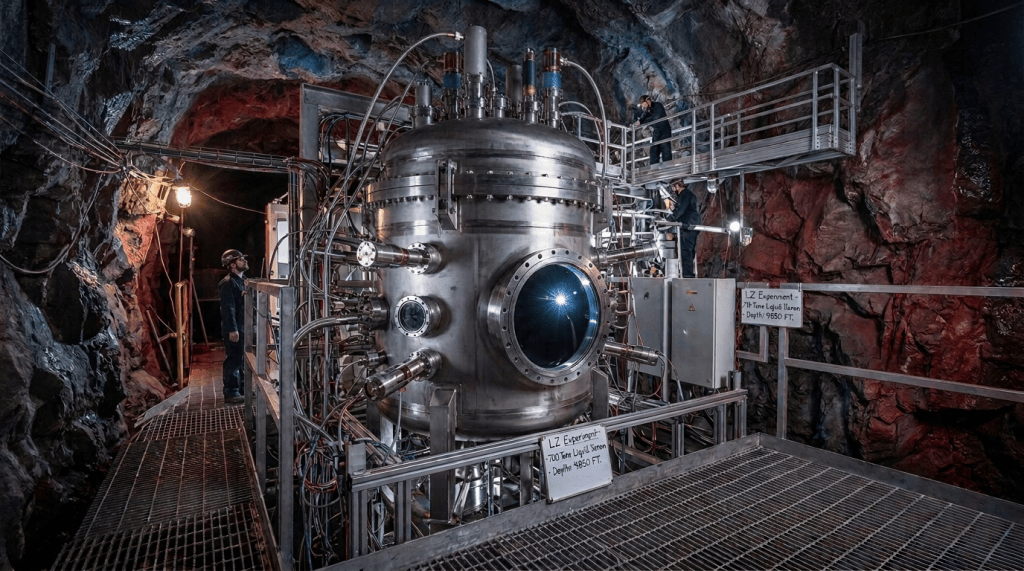
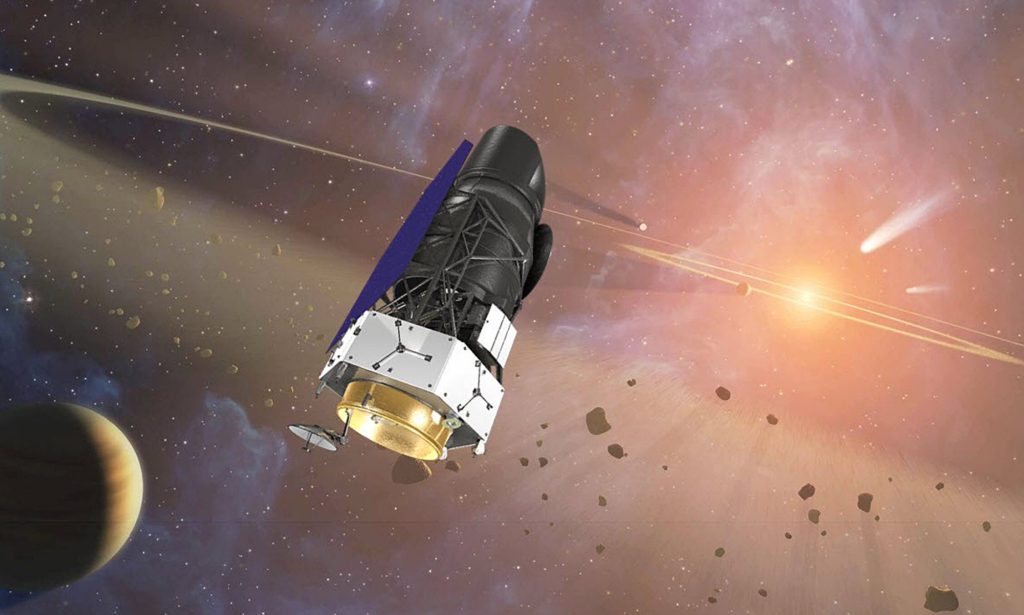
Euclid (named after a Greek Mathematician) is a European Space Agency (ESA) space telescope designed to map the geometry of the dark universe by studying the distribution of putative dark matter and putative dark energy. I write putative because all evidence for such matter/energy is circumstantial and model dependent. No direct laboratory evidence has ever been found for their existence.
The Euclid spacecraft was put into orbit on 1 July 2023. It operates from the Sun-Earth Lagrange point 2 (L2), approximately 1.5 million kilometers from Earth.
Euclid includes a 1.2-meter diameter Korsch-type telescope with a 600-megapixel visible-light camera and a near-infrared spectrometer/ photometer. Over its nominal six-year mission, Euclid aims to create a 3D map of over one-third of the sky, observing up to two billion galaxies to measure their shapes, distances, and redshifts with unprecedented precision.
Let me break this down for you. The bold items need to be understood.
The Euclid telescope is one of the most advanced telescopes humans have ever built. It collects visible light and near infrared light photons into its receivers. The receivers include a spectrometer and a photometer.
A photometer measures the illuminance or intensity of light using photodiodes. Nowadays these are solid state devices and are used on Earth and in space.
A spectrometer disperses the electromagnetic radiation it receives into its various frequencies (in units of Hz) as shown in Fig. 3 below. These frequencies are usually listed according to wavelength (in units of m) as shown. That is calculated using the fact that wavelength = speed of light (c) divided by frequency. So in this case the measured two-way or round-trip speed of light, c is assumed.
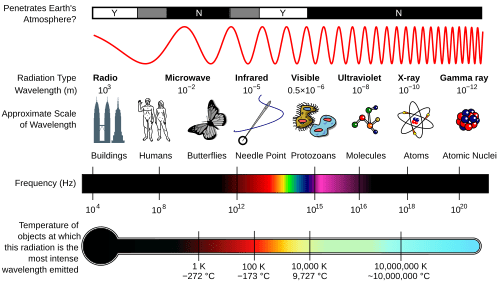
A telescope only collects photons of the electromagnetic spectrum. Its instruments measures the intensity of those photons and disperses the frequencies into a spectrum as shown in Fig. 4 below.
Then, for example, the observed spectrum of a galaxy cluster (Fig. 4 left side) is compared with the spectrum of a local source like from a lab where ions are excited in a discharge lamp, or, from the Sun (Fig. 4 right ride). If using the Sun we call that a heliocentric measurement. That would be the standard for large-scale galaxy surveys.
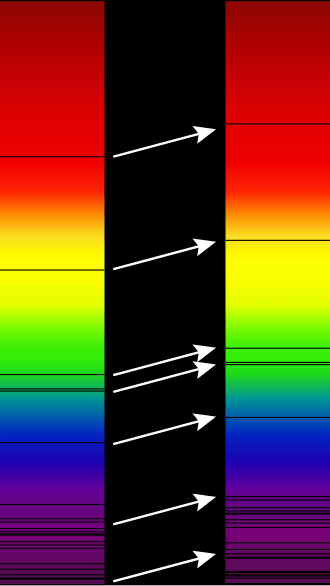
From the comparison of spectral lines in the source spectrum to the reference spectrum (the Sun) as shown in Fig. 4 it is clear to see that when the lines are shifted red-ward, as they are in most galaxies, we call that galaxy or cluster of galaxies redshifted.
To summarise: so far the only actual observations are the intensity of the received light (electromagnetic radiation from any wave-band) and the spectrum in that light. From that a redshift, and sometimes a blueshift, is calculated by a comparison with a local reference.
Redshift means a red-ward shift in wavelength. However the source spectrum is generated by the emissions (or absorptions) of the particular gases in the stars making up the galaxies under observation. In reality it is the energy or frequency of the atomic transitions in those light sources that are received and measured.
The Euclid space telescope also accurately measures the positions on the sky of the sources of the photons, the light it collects. The sources are intended to be about 2 billion galaxies. The position measurements are Declination (Dec) and Right Ascension (RA).
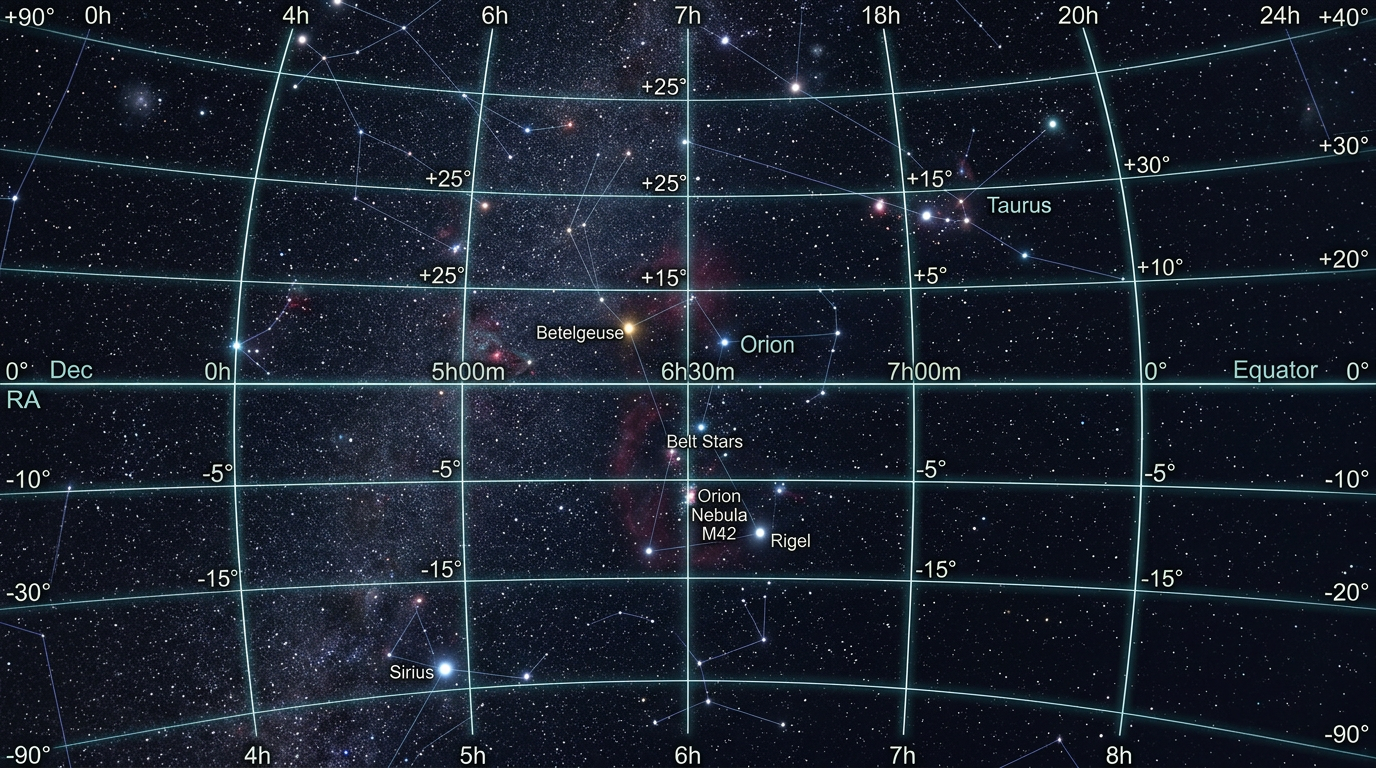
Imagine you are looking out into space. You are then at the centre of a celestial sphere. All the stars and constellations are on the surface of that sphere. See Fig. 5. It is a 2D surface on which we see all the celestial objects, which astronomers have used for thousands of years.
This means they can create a 2D map of the location of the stars and galaxies but how would they create a 3D map, which is the intended mission goal of the Euclid telescope?
To get the extra dimension, the radial distance of the source of light, the luminosity of the object as seen on Earth might be used.
We know that if you have a standard light source of known intrinsic brightness and move it away, doubling its distance, then the observed brightness of the source decreases by a factor of four. This is known as the inverse square law of illumination.
But are all galaxies of the same intrinsic brightness? No, they are not. So this is problematic. However there are methods to classify them into different types and assume they are the same size and hence intrinsic brightness in any given type. Nevertheless assumptions are now coming in.
On top of that cosmological modelling is now needed because depending on whether the universe is expanding or not, and depending on galaxy evolution over time the size of the galaxies will be different. So now we are into guess work and no longer direct measurements.
If looking out into the cosmos is not the same as looking back in time then you have another problem. Only mathematical modelling of the evolution of the whole universe and modelling of the size of galaxies at different times in the alleged history of the universe since the alleged big bang could tell you how big a galaxy is when you observe it and hence what its absolute or intrinsic brightness is. So intrinsic brightness is not observed directly. Only the apparent brightness is observed and measured by the photodetectors in the telescope receivers.
So for these very large galaxy surveys the astronomers measure the source position on the sky and calculate the distance to the source assuming the standard cosmology, the expanding universe Friedmann-Lemaître model. To make that calculation they calculate the galaxies’ redshifts and feed that into the model to get a distance. The redshifts are measured but the distances are inferred based on unprovable assumptions in the model. See Cosmology’s Fatal Weakness—Underdetermination.
South African Quaker cosmologist George F.R. Ellis understood this problem when he wrote:
People need to be aware that there is a range of models that could explain the observations. For instance, I can construct you a spherically symmetrical universe with Earth at its center, and you cannot disprove it based on observations… you can only exclude it on philosophical grounds.
In my view there is absolutely nothing wrong in that. What I want to bring into the open is the fact that we are using philosophical criteria in choosing our models. A lot of cosmology tries to hide that.
Gibbs, W.W.: Profile: George F.R. Ellis: Thinking globally, acting universally. Sci. Am. 273(4), 50–55 (1995)
The philosophical grounds are those unprovable assumptions.
The reason he states “I can construct you a spherically symmetrical universe with Earth at its center, and you cannot disprove it based on observations”, is because he is including the implied assumption that the redshifts of the galaxies gives you their radial distance from the Earth-based observer.
More accurately heliocentric redshifts are used which would very slightly modify his statement to say the Sun is at its centre.
This by itself in no way implies the Earth at the centre of the universe, because all measurements are in a radial direction from the Earth and that tends to bias the observers location. This leads to how do we understand effects of motion of galaxies within clusters.
Experimentally we know about the Doppler effect on sound due to the relative motion between the source and the observer. A similar Doppler effect applies to light which has been experimentally verified in lab experiments. It is in effect common place.
The Bullseye effect and the Fingers-of-God (FOG) effect are two direct results of Doppler motion which would be incorrectly interpreted as structure of galaxies pointing back at the earth.
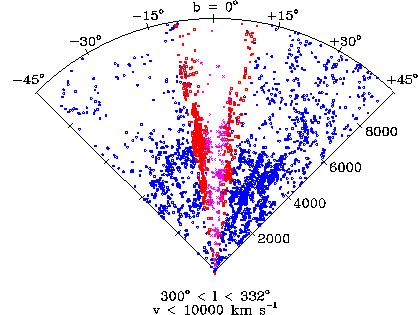
See The Fingers of God Effect: Not Evidence For a Geocentric Universe
The Bullseye effect is similar but on larger scale than the FOG effect. These effects though are only seen in redshift space. Only when one applies a model to interpret the redshifts as radial motion of the galaxies within a cluster does one see the clusters point back to Earth on one of these maps.
They show the declination of the source and the assumed radial velocity calculated from applying in the Hubble law, r = (cH0-1) z = (H0-1) v. The parameters are r the derived radial distance to the galaxy from z the measured redshift; H0 is the Hubble constant; v is the calculated velocity of the galaxy using v = c.z and c the vacuum two-way speed of light.
But was the radial distance measured? No it wasn’t! Only the radial component of the redshift was measured. This is because if the relative motion of a galaxy causes redshift then only a radial component can be measured. The other components perpendicular to the radial line of sight of the observer cannot be measured. I think Doppler motion of galaxies within clusters is a reasonable assumption, but it is still an assumption.
The same reason to convert from redshift space to real space in these large galaxy surveys relies upon the Hubble law. On the largest scales it relies on the assumed cosmology. Nevertheless the only observable component of galaxy redshifts is the radial component. So if that reflects radial outward expansion relative to the Earth observer then that is the reason George F.R. Ellis could make his claim. And rightly he stated that only philosophically could such a model be rejected.
More than 10 years back I did a study on a large galaxy survey data from Sloan data release 5, and assumed a Hubble law redshift-distance relation to calculate radial distance from Earth. But without converting I detected concentric shells of galaxies in redshift space. See Our Galaxy Near the Centre of Concentric Spherical Shells of Galaxies?

Whether or not these shell are centred on the earth in real space requires some assumptions and interpretation of the evidence. I was still working on seeing if we could validate whether the near galactocentric structure could be verified, as a real space effect, after further more rigorous analysis. That work with ICR was never completed.
Once certain assumptions are made about the universe, allowing for what we can’t see and cosmic variance, the result may well be that we can’t conclude that it is real space cosmic structure. It may only be a redshift space effect.
Conclusion
There are only three useful measurables in galactic astronomy. They are:
- the position (RA and Dec) of the source on the sky, that is a 2D map and not 3D. There is no depth or radial distance measurement;
- the luminosity of the source. That is not the intrinsic luminosity but the apparent luminosity as measured by the observer’s instruments; and,
- the spectral features in the light received by the telescope.
All other parameters are not measured but derived. Even the redshifts and blueshifts of spectral lines are derived. Yet they do not require any modelling assumptions so we can call them a measurement.
All interpretations are derived. They are not observed but require unprovable assumptions. And one of those assumptions is the one-way speed of light. And as we have learned over the space of the last 120 years that is not measurable. It must be chosen by convention. See How Fast Does Information Travel to Earth from the Outer Most Reaches of the Cosmos?
Redshift measurements are usually written as a function of wavelength but that is not strictly correct. The emission or absorption lines in the spectra are due to the oscillation in the excited gases in the atmosphere of stars, galaxies and nebulae. Only by assuming the value of the two-way isotropic speed of light, c, can we convert to wavelength.
That may be perfectly valid but what I am pointing out is that the speed of light from the source needs to be assumed. If we assume the one-way speed of light coming to the observer is infinitely fast, as implied biblically, then we must speak of frequencies for the shifted spectral lines.
The luminosities of the source galaxies do not give you a radial distance unless you assume a cosmology and you know the intrinsic sizes of the galaxies you are measuring. You can measure their angular sizes but without assuming a cosmology you cannot know their absolute sizes and hence their absolute luminosities. So it would be circular reasoning to use their luminosities to test your cosmological model.
Yet biblically it would be valid to say that all the stars and galaxies we observe on the celestial sphere, that is, the hypothetical spherical shell around Earth or around the solar system with the Sun at the centre, are less than 10,000 years old. That means the light from all the galaxies in the universe has arrived here within that time period. And that cannot be disproved scientifically. Only philosophically could that conclusion be rejected.
Therefore what we see in the cosmos is the real time picture. All stars and galaxies were created less than 10,000 years ago and they have changed or evolved very little in that time period.
You may download a PDF of this piece below. You may freely share this in its entirety.
Addendum (10/7/2026)
A physicist friend of mine, after reading this piece, wrote the following:
In your article (above) I read:
There are only three useful measurables in galactic astronomy. They are:
- the position (RA and Dec) of the source on the sky, that is a 2D map and not 3D. There is no depth or radial distance measurement;
- the luminosity of the source. That is not the intrinsic luminosity but the apparent luminosity as measured by the observer’s instruments; and,
- the spectral features in the light received by the telescope.
I had the same claim in a talk I gave in March, but then I realized there is a fourth measurable:
- the duration, as measured by our instruments, of periodic phenomena (e.g. occultations, pulsars) and transient phenomena such as supernovae, fast radio bursts, and gamma-ray bursts.
I don’t think this changes the conclusions of your article, but it would make it more complete.
P.S. I find it more practical to group these measurables as:
1- observed geometry: 2D position on the sky and angular size of objects,
2- observed flux: luminosity and spectrum of photon/neutrino sources,
3- observed time: duration of temporal phenomena.
Of course, intrinsic properties are all model-dependent.
He is correct but it does not change the main points of my piece.
Even if you consider supernova light curves (e.g. SNe Type Ia), which are observed over a time duration, and used to calculate the absolute luminosity of the source as a standard candle, significant model-dependent calibrations need to be done. In fact, candidate SNe are selected assuming a cosmology which are in turn used to test the same cosmology. Circular reasoning.
Related Reading
- Understanding the Age of the Earth from a Young Earth Perspective
- What Do We Really Know About the Cosmos?
- Development of an “Old” Universe in Science
- How Fast Does Information Travel to Earth from the Outer Most Reaches of the Cosmos?
- Do Distant Light Emissions Prove a Finite One-Way Speed of Light?
- The Universe: Finite or Infinite, Bounded or Unbounded
- Cosmology’s Achilles’ Heel
- Cosmology’s Fatal Weakness—Underdetermination
- A Biblical Creationist Cosmogony
- Review of “The Principle”
- The Fingers of God Effect: Not Evidence For a Geocentric Universe
- Our Galaxy Near the Centre of Concentric Spherical Shells of Galaxies?
Free Subscribers
Subscribe to our Newsletters as a Free Subscriber and be notified by email. Just put your email address in the box at the bottom of your screen.
You’ll get an email each time we publish a new article. It is quick and easy to do and totally free. You only need do it once.
Premium Subscribers
Subscribe to our Newsletters as a Premium Subscribers at $5 USD/month or $30 USD/year (you choose). Cancel anytime.
Paid Premium Subscribers will get exclusive access to certain content I publish. That will only cost you a cup of coffee per month.
Also you’ll be able to download, for free, a PDF of my book Apocalypse Now and also a PDF of my book The Physics of Creation The Creator’s Ultimate Design for Earth.
You can download them from the link below.
This is how you can support my work. I have been publishing this website for 10 years now and up to 2024 I never asked for any support.
Press the button “Premium” on the front page to find a list of Premium content. Thanks so much to all supporters.
At a minimum, please join as a Free Subscriber. It’ll cost you nothing. It may also help me beat the shadow banning of some posts.




 Bible Science Forum
Leave a comment